
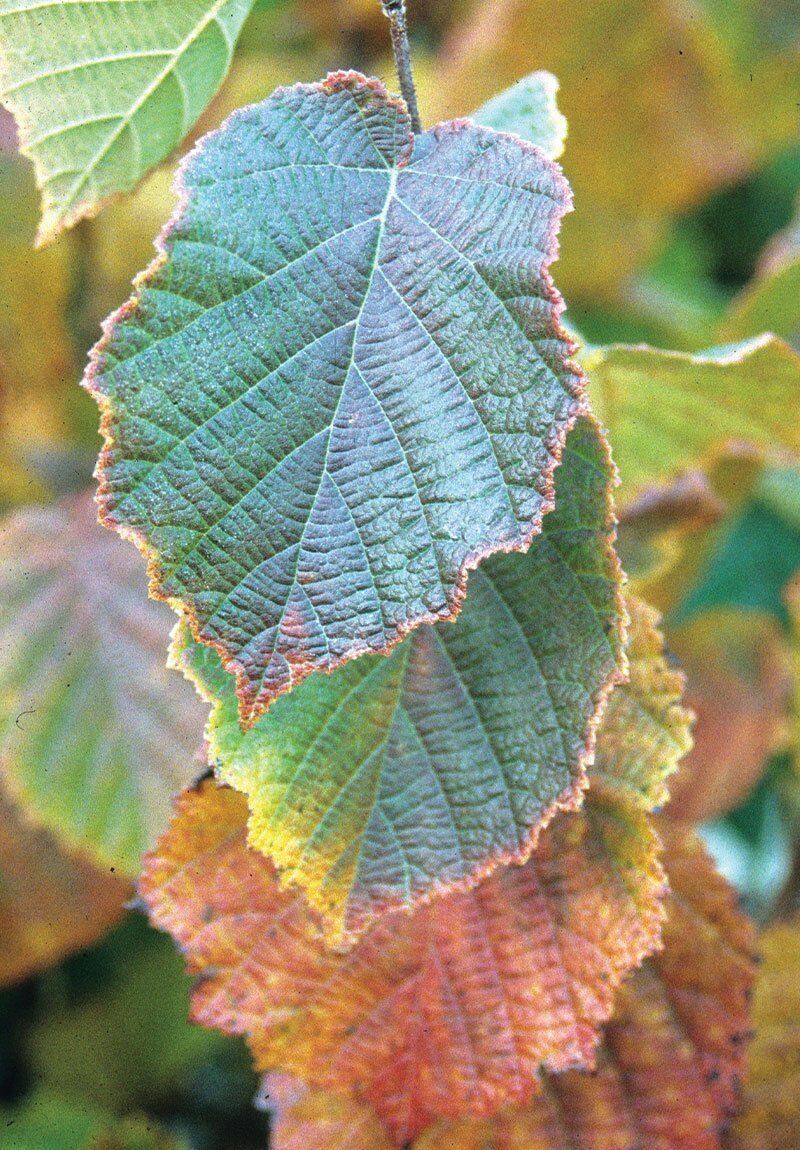

American Filbert will grow in a wide variety of conditions, attracts many species of wildlife, and has four-season interest. This unique native shrub offers visual interest in all seasons and tolerates a wide variety of conditions. The pendulous male catkins develop in fall and provide winter interest. In early Spring, the catkins bloom turning bright yellow. Next emerges the ovate dark green foliage which has ridges and doubly serrate margins. Meanwhile, large clumps of 2 to 5, 1/2 inch nuts emerge from the female flowers. The nuts mature between September-October. People and animals enjoy the hazelnuts, which have a similar flavor to commercially cultivated European and hybrid hazelnuts. Hazelnuts have a higher nutritional value than acorns and are a protein source for many types of wildlife, including wild turkey, woodpeckers, and blue jays. Thickets provide shelter and nesting areas for wildlife as well. American filbert can also be grown in dry shady areas with a layer of organic mulch, as long as it is monitored for water during periods of drought. It is tolerant of variable soil pH if grown in well-drained soil, tolerant of drought, and will grow in dry, moist, clay, or sandy soil conditions.
American Filbert is a host plant to caterpillars of the Saturniidae family, some of the most spectacular moths in North America, including the beautiful green Luna moth (Actias luna) and the large, strikingly patterned Cecropia moth (Hyalophora cecropia). The plant is also a host to the Walnut Sphinx (Amorpha juglandis), Polyphemus moth (Antheracea Polyphemus), Corylus Dagger moth (Acronicta falcula), Zebra Caterpillar moth (Melanchra picta), Mottled Bomolocha (Bomolocha palparia), American Dagger moth (Acronicta americana), Alder Tubemaker moth (Acrobasisrubrifasciella), Zigzag Herpetogramma moth (Herpetogramma thestealis), Filbert Worm moth (Melissopus latiferreanus), and Case-Bearing moth (Coleophora corylifoliella). In our area, typically the caterpillars are not prolific enough to cause significant damage.
Price is for 1 shrub | #2 Container
Plant spread: 8'
Bloom: March - April | Height: 8' | Average medium to well-drained soil
We envision a day when knowledge of birds is widespread, decisions affecting them are based on good science, and citizens care about conservation and participate in it so that common species are kept common and imperiled populations are restored.