
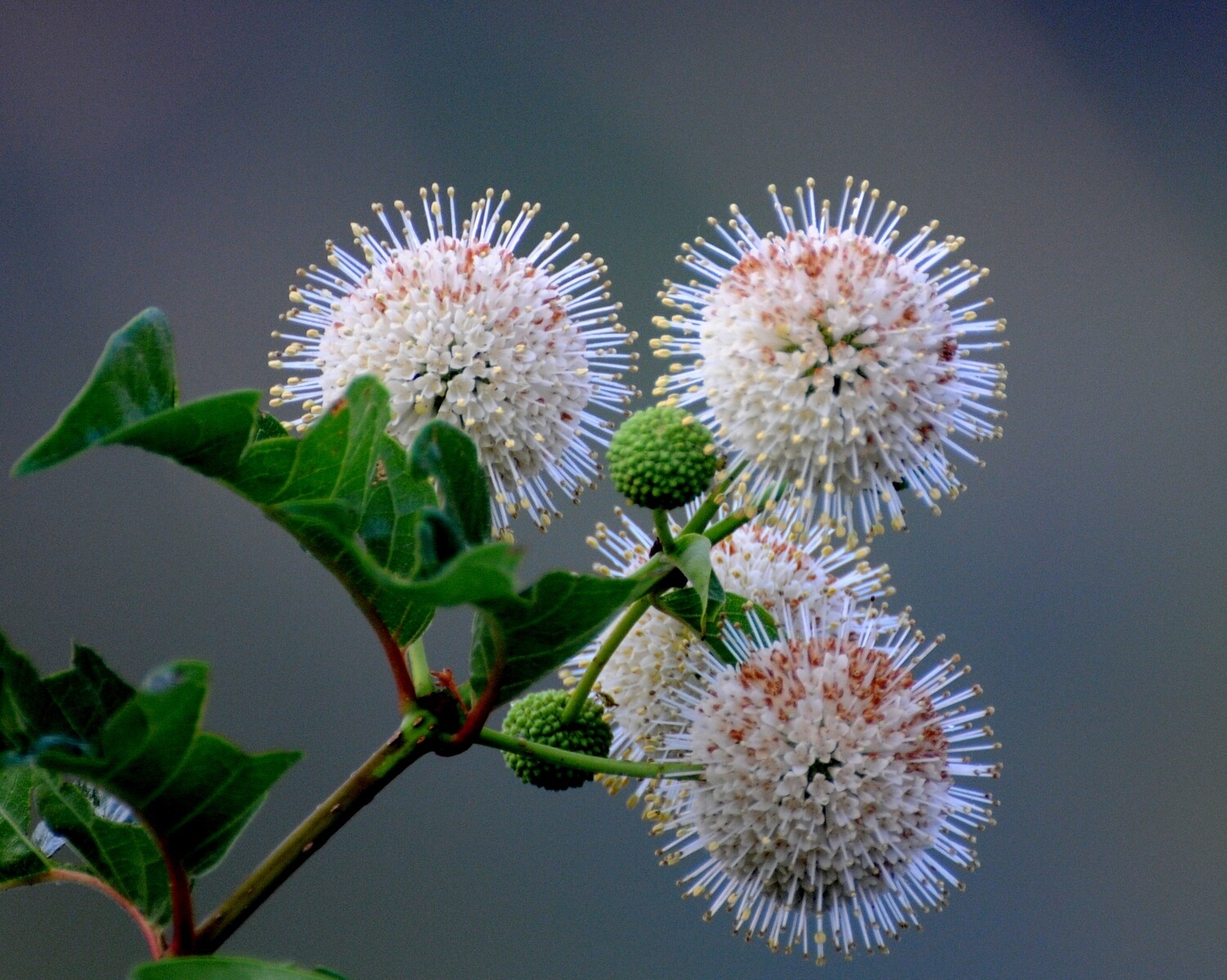

Buttonbush is one of the last native shrubs to leaf out in the spring. Once their oval to elliptical glossy green leaves emerges, they provide food for the larval stage of the Beautiful Wood Nymph (Eudryas grata), Titan Sphinx (Aellopos titan), and Hydrangea Sphinx (Darapsa versicolor). Moth and butterflies flock to Buttonbush for its nectar. Visitors include the Dion Skipper (Euphyes dion), Black Dash (Euphyes conspicua), Hoary Edge (Achalarus lyciades), Silver-spotted Skipper (Epargyreus clarus), Painted Lady (Vanessa cardui), Horace’s Duskywing (Erynnis horatius), Delaware Skipper (Anatrytone logan), Sachem (Atalopedes campestris), Ocola Skipper (Panoquina ocola), Ash Tip Borer Moth (Papaipema furcata), Connubial Underwing (Catocala connubialis), White-marked Tussock Moth (Orgyia leucostigma), Promethea SIlkmoth (Callosamia promethea), Lost Owlet (Ledaea perditalis), Harris’s Three-spot (Harrisimemna trisignata), Definite Tussock Moth (Orgyia definita), Eastern Tiger Swallowtail (Papilio glaucus), and Monarch (Danaus plexippus).
In early to mid-July, Buttonbush flowers have prominent round-headed pistils that make them look like pincushions. Bees, hummingbirds, and butterflies, including monarchs, appear in the masses and use the flowers as a source of nectar. Learn more about how to attract monarch to your yard. Two-spotted Bumble bee (Bombus bimaculatus), Half-black bee (Bombus vagans), Common Eastern Bumble bee (Bombus impatiens), Confusing bee (Bombus perplexus), Green Sweat bees (Halictus spp.), small carpenter bees (Ceratina spp.), and Digger bees (Anthophora spp.) will frequent this plant often.
Buttonbush flowers when many other plants aren’t blooming, which helps pollinators get through lean times until late summer and fall-blooming plants like Aster and Goldenrods start blooming. Russet brown fruits follow the flowers which may persist through winter. Waterfowl, mallards, and other birds eat the fruit and seeds. In their native environment, wood ducks commonly use the plant’s structure for the protection of brooding nests.
Price is for 1 shrub | #2 Container
Plant spread: 4-6'
Bloom: June-July | Height: 6-8' | Wet to moist soil
Plant description from Johnsons Nursery
Photos courtesy of Larry Smith, USDA, Manjith Kainickara, James Miller, Tod Bodner
We envision a day when knowledge of birds is widespread, decisions affecting them are based on good science, and citizens care about conservation and participate in it so that common species are kept common and imperiled populations are restored.