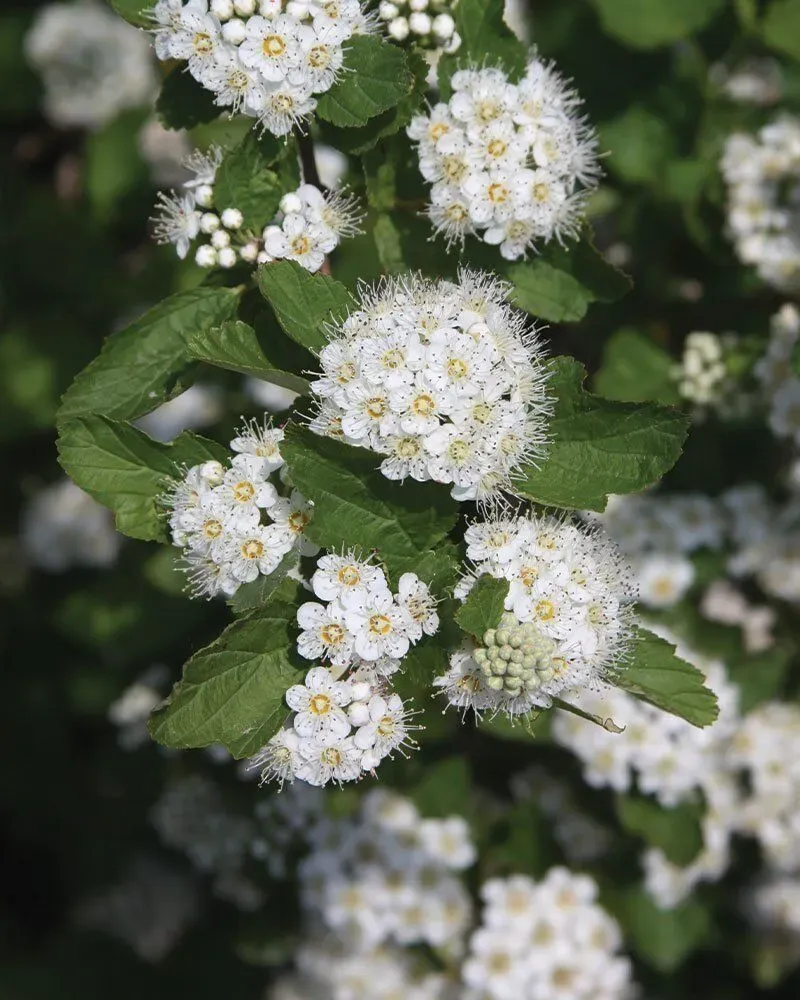

Common Ninebark is a tough, Wisconsin native shrub. Does it look a little wild? Yes, yes it does. Is it for everyone? Nope. But if you are looking for a shrub that can handle the bitter cold, many soil types, and even the occasional drought, Common Ninebark is a fine option. Its branches, which can look like a million stems are frantically reaching for purchase before they fall off the side of a cliff, provide dense coverage and plenty of interest in all four seasons.
Birds and mammals eat the seeds and use the shrub for shelter against weather and predators. This especially helps ground birds such as turkey, quail, and pheasant. Birds use the strips of bark from the stems as nesting material.
Hummingbirds, honeybees, long and short-tongued bees, and mining bees, as well as wasps and flies have been observed foraging the flowers. Common Ninebark is a host plant for several moth species including White Spring Moth (Lomographa vestaliata), Unicorn Caterpillar (Schizura unicornis), Dark-spotted Palthis Moth (Palthis angulalis), Io Moth (Automeris io), Large Maple Spanworm (Prochoerodes lineola), Hitched Arches (Melanchra adjunct), Bluish Spring Moth (Lomographa semiclarata), Glorious Habrosyne Moth (Habrosyne gloriosa), Raspberry Leafroller Moth (Olethreutes permundana), and Dimorphic Eulithis Moth (Eulithis molliculata).
Other insect visitors include Ninebark Calligrapha Beetle (Calligrapha spiraeae), Plagiognathus punctatipes, beetles, and aphids.
Price is for 1 shrub | #2 or #5 Container
Plant spread: 5-10'
Bloom: May | Height: 5-10' | Wet Mesic-Dry
Description and photos from Johnsons Nursery
We envision a day when knowledge of birds is widespread, decisions affecting them are based on good science, and citizens care about conservation and participate in it so that common species are kept common and imperiled populations are restored.