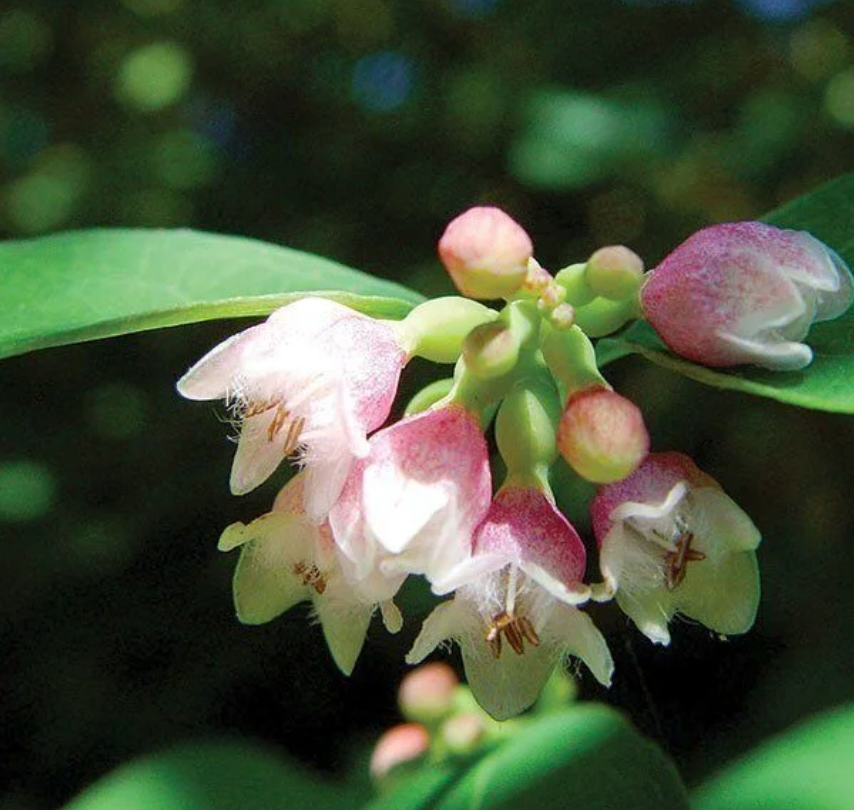

As a native shrub, Common Snowberry brings many attributes to wildlife. Although poisonous to humans due to saponins in the fruit, it does not pose any danger to the many small mammals that use this plant’s berries for food. This includes White-tailed Deer, bears, elk, moose, American Robins, Swainson’s Thrush, Hermit Thrush, Greater Prairie Chicken, Pheasants, Ruffed Grouse, Bobwhite Quail, Evening Grosbeak, Cedar Waxwing, and Pine Grosbeak. The shrub also provides cover and nesting sites for game birds, rabbits, and other small animals.
Clusters of flowers in spring/early summer attract hummingbirds; however, the shrub is more often pollinated by bees. Visitors include Ruby-throated hummingbirds, honeybees, bumblebees, large carpenter bees, leaf-cutting bees, mason bees, green metallic bees, Andrenid bees, Vespid wasps, Syrphid flies, and Tachinid flies.
Common Snowberry is a host for the Snowberry Clearwing moth, Hummingbird Clearwing moth, White Spring moth, and Sphinx Moth.
Price is for 1 shrub | #2 Container
Plant spread: 4-6'
Bloom: May-July | Height: 3-5' | Prefers dry and well-drained soil, tolerates poor nutrient conditions

Description and photos from Johnsons Nursery
We envision a day when knowledge of birds is widespread, decisions affecting them are based on good science, and citizens care about conservation and participate in it so that common species are kept common and imperiled populations are restored.