
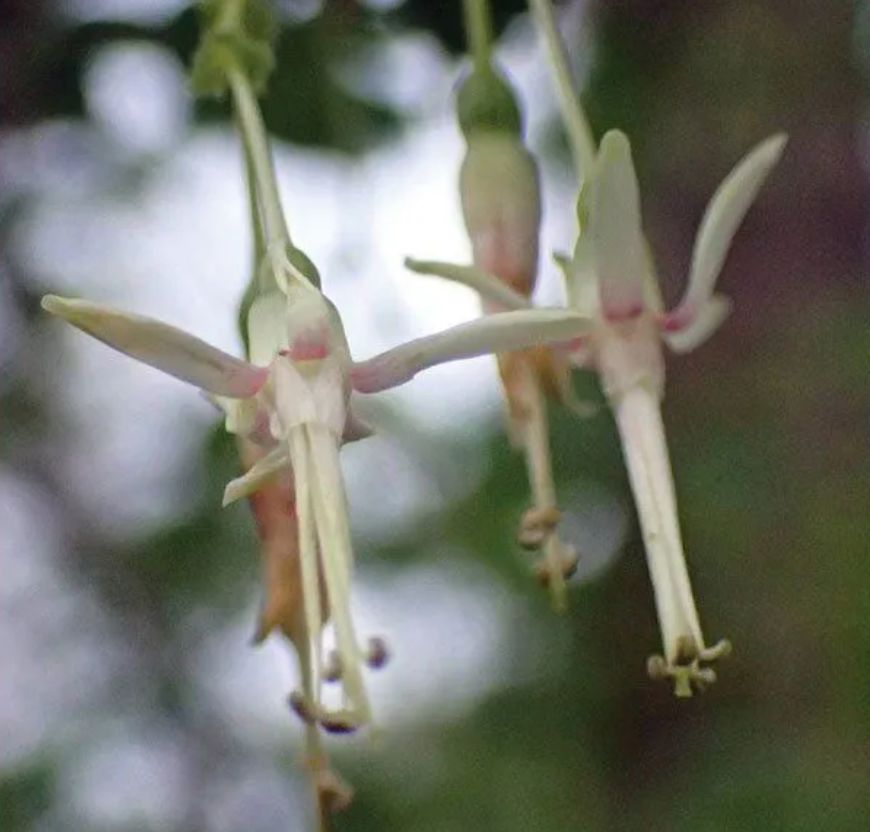

This Wisconsin native shrub can be found in our open woodlands, savannas, meadows, and woodland borders. Its white, hanging, trumpet-shaped flowers benefit pollinators, and the showy, agreeable fruit is enjoyed by humans and wildlife alike.
Missouri Gooseberry has stout thorns, edible fruit, and showy, hanging white flowers that appear solitary or in clusters. The fruit may be picked off the plant and eaten fresh or used in juices, syrups, jellies, preserves, and pies. Each flower, once fertilized, is replaced by a globoid berry approximately 1/3″ across. The berry is initially green but ripens to a dull red or purple.
Because of the popularity of the fruit, Gooseberry can be seen planted in vegetable gardens and bird gardens.
The nectar and pollen of the flowers are a significant attraction to bees, including honeybees, bumblebees, cuckoo bees, mason bees, halictid bees, and andrenine bees. Syrphid flies will also feed on the pollen.
Gooseberry is a host to small magpies (Eurrhypara hortulata), Green commas (Polygonia faunus), Io moths (Automeris io), Gray commas (Polygonia progne), Scallop moths (Cepphis armataria), Virginia Tiger moths (Spilosoma virginica), Currant Fruitworm moths (Carposina fernaldana), Currant Spanworm moths (Macaria ribearia), Barred Angle moths (Macariasubcessaria), Currant Clearwing moths (Synanthedon tipuliformis), Cecropia moths (Hyalophora cecropia), and Crocus geometers (Xanthotype sospeta).
Several songbirds and upland game birds eat the fruits of Gooseberry. It’s a preferred food source for Hermit thrushes, Eastern Bluebirds, American Robins, Brown Thrashers, Northern Mockingbirds, Gray Catbirds, and Cedar Waxwings. As a thorny shrub, it also provides excellent habitat and cover for these birds as well as Bobwhite Quail, Wild Turkey, Ruffed Grouse, and Song Sparrows.
Price is for 1 shrub | #1 Container
Plant spread: 2'-4'
Bloom: April-May | Height: 2'-4' | Moisture: Wet Medium, Medium, Dry Medium
Description courtesy of Johnson's Nursery
Photos from Johnson's Nursery
We envision a day when knowledge of birds is widespread, decisions affecting them are based on good science, and citizens care about conservation and participate in it so that common species are kept common and imperiled populations are restored.