
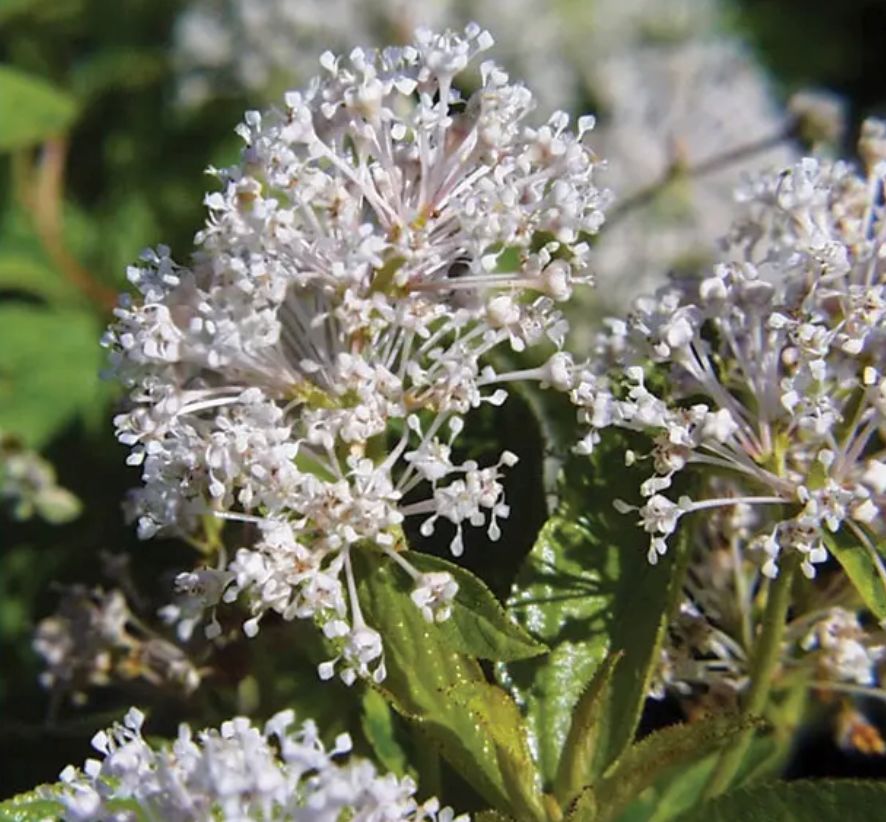

New Jersey Tea is an attractive Wisconsin native sub-shrub for our prairies and open savannas. The blanket of white flowers in late June to July and attractive, deep green foliage make this shrub sensational for mass plantings. A lover of full sun and well-drained soil, this shrub is low-maintenance and favored by wildlife in sunny, dry locations. The dried leaves make a rather tasty, caffeine-free tea.
Boasting woody and deep roots, New Jersey Tea is an excellent drought-resistant species useful for shrub borders, foundations, or mass plantings. Sites that are rocky, sandy, and sunny will allow this plant to thrive in locations where other plants wither away. It’s tolerant of juglone (Black Walnut Toxicity) and road salt – it can be planted adjacent to roadways and walkways that are salted in winter, making a quality choice for urban locations and smaller sites.
Ceanothus can be used as a sub-shrub in a restoration or prairie planting, as it tolerates both fire and being cut to the ground each year in spring. Its ability to fix nitrogen improves soil fertility over time.
With its dense form, fragrant flowers, and tasty leaves and twigs, New Jersey Tea benefits a wide range of wildlife.
White-tailed deer and rabbits will nibble on the flowers, leaves, and twigs throughout the year.
It is the larval host plant for Mottled Duskywing (Erynnis martialis), Spring Azure (Celastrina ladon), and Summer Azure (Celastrina neglecta) butterflies and is a nectar source for monarchs. Learn more about how to attract monarch to your yard.
It’s also a food source for native miner bees (Pseudopanurgus pauper and Pseudopanurgus virginicus).
Goldfinches, house finches, and other birds are known to eat the seeds.
Price is for 1 shrub | #2 Container
Plant spread:2' - 3'
Bloom: June - July | Height: 3' - 4' | Prefers full sun and well-drained, dry soil
Photos and description from Johnson's Nursery
We envision a day when knowledge of birds is widespread, decisions affecting them are based on good science, and citizens care about conservation and participate in it so that common species are kept common and imperiled populations are restored.