
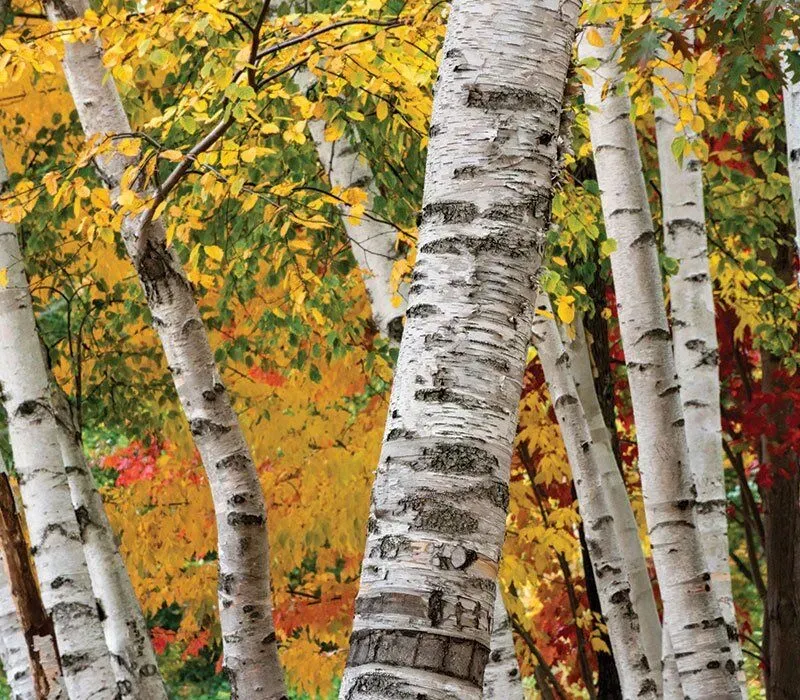

Numerous birds feed on the buds, catkins, and seeds, such as ruffed grouse, redpoll, pine siskin, and chickadee. These birds obtain a considerable portion of their annual diet from birch seeds. Porcupine and beavers will feed on the bark, although porcupine primarily feeds on the inner layer of bark. Snowshoe hares, shrews, and voles browse on seedlings and saplings. These small mammals are critical prey for many carnivores like fox, fisher, and raptors.
Aside from sustaining numerous birds and mammals, Paper Birch also makes a lovely nesting site for woodpeckers, nuthatch, and swallow. It’s a favorite of the yellow-bellied sapsucker, which peck holes in the bark to feed on the sap. The holes left behind are known as sap wells, drawing in squirrels and even hummingbirds.
Paper Birch is a larval host plant for the lunar moth and supports the larvae of the Eastern tiger swallowtail.
Paper Birch is best grown in moist to wet, well-draining soils, often found in sandy or rocky soils but will tolerate a variety of soil textures. You can site it in full sun but it will appreciate some afternoon shade to protect it from the intense summer heat. This birch likes consistent moisture, so providing light shade will help keep its roots cool and prevent it from drying out.
Price is for 1 tree | #5 Multi-stem tree or #5 Single stem tree
Height: 50' | Spread: 35'
Grows best in medium to wet well-draining soils.

Photos and description by Johnsons Nursery
We envision a day when knowledge of birds is widespread, decisions affecting them are based on good science, and citizens care about conservation and participate in it so that common species are kept common and imperiled populations are restored.