
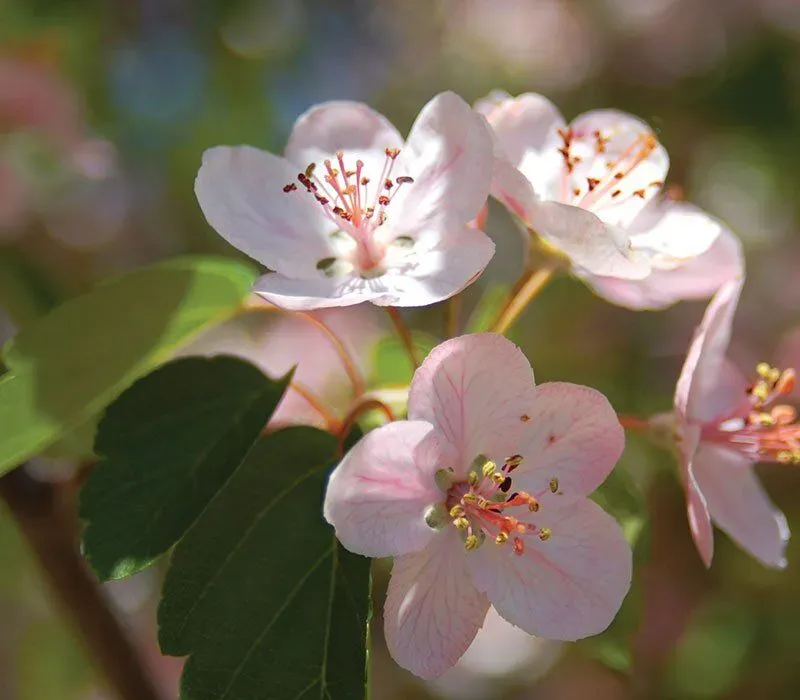
Prairie Crabapple is a small ornamental tree or large shrub once commonly found throughout the Midwest in prairies, savannas, open woods, along streams, and pastures. A native Wisconsin tree, the main show happens in spring when branches are blanketed in deep pink buds that open to reveal clusters of fragrant, soft pink and white flowers. In fall, shiny deep green leaves turn a rose color, mixed with varying shades of yellow and green. Its bark is somewhat scaly and peeling, adding visual interest during winter.
The large and fragrant flowers of the Prairie Crabapple are like candy to honeybees, bumblebees, sweat bees, miner bees, butterflies, and skippers seeking nectar and pollen.
The larvae of the Tiger Swallowtail (Papilio glaucus) and Striped Hairstreak (Satyrium liparops), will often feed on the leaves.
While too sour and bitter tasting for most people, the fruit is eaten by at least 20 species of birds including Hairy, Red-bellied, Downy, and Hairy Woodpeckers, as well as Northern Flickers, Blue Jays, Cedar Waxwings, Tufted Titmice, Baltimore Orioles, and American Robins. Other birds prefer feeding on the buds only including Ruffed Grouse, Purple Finch, and White-throated Sparrows. Woodpeckers and insectivorous birds also benefit from the variety of insects that the Prairie Crabapple attracts.
Our mammal friends, including bears, coyotes, opossums, foxes, raccoons, rabbits, skunks, woodchucks, squirrels, and deer enjoy the fruit as well. Cottontail Rabbits have been known to chew on the bark of saplings during winter-if you have heavy rabbit pressure in your area, a young tree may need to be protected.
With dense branching, it’s a great nesting habitat for Yellow-breasted Chat (a Special Concern species in Wisconsin), Orchard Orioles, and Song Sparrows, and also provides good cover for many mammals.
Price is for 1 tree | #1 Container
Height:10' - 20' | Spread: 15'
Acidic, moist, and well-drained, will tolerate soils from pure damp clay to dry sandy dunes.
Photos and description from Johnsons Nursery
We envision a day when knowledge of birds is widespread, decisions affecting them are based on good science, and citizens care about conservation and participate in it so that common species are kept common and imperiled populations are restored.