
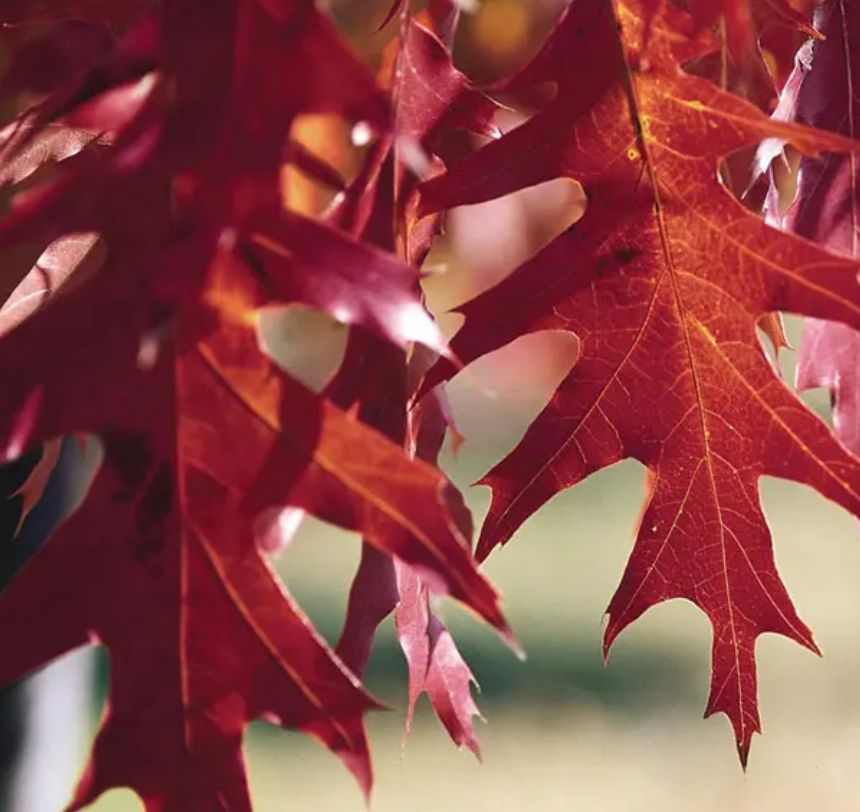

A monarch of our climax forests in Wisconsin! Red Oak shines as a specimen tree with its brilliant red fall color and deep green leaves in summer. It is the fastest-growing native oak in Wisconsin and its silvery smooth bark provides excellent winter interest when young.
Red Oak is a larval host for the beautiful Gray Hairstreak as well as Common Oak moth (Phoberia atomaris), Fawn Sallow (Psaphida styracis), Basswood Leafroller moth (Pantographa limata), Figure-eight Sallow (Psaphida resumens), Sheathed Quaker (Ulolonche culea), Acorn moth (Blastobasis glandulella), Green-dusted Zale (Zale aeruginosa), White-headed Prominent (Symmerista albifrons), Angulose Prominent (Peridea angulosa), Oval-based Prominent (Peridea basitriens), Ilia Underwing (Catocala ilia), Roland’s Sallow (Psaphida rolani), Mottled Prominent (Macrurocampa marthesia), Confused Meganola moth (Meganola minuscula), American Oak Beauty (Nacophora quernaria), Variable Oakleaf caterpillar (Lochmaeus manteo), Black-patched Graylet (Hyperstrotia secta), Buck moth (Hemileuca maia), Spiny oak-slug moth (Euclea delphinii), Yellow-banded Tussock moth (Dasychira basiflava), American Dun-bar moth (Cosmia calami), Hickory Hairstreak (Satyrium caryaevorus), Oak Leafroller moth (Archips semiferanus), Little Nymph Underwing (Catocala micronympha), Slowpoke moth (Anorthodes tarda), Girlfriend Underwing (Catocala amica), Oak Webworm moth (Archips fervidana), Orange-tipped Oakworm moth (Anisota senatoria), Oak Hairstreak (Satyrium favonius), Juvenal’s Duskywing (Erynnis juvenalis), and Sleepy Duskywing (Erynnis brizo).
Do not prune Red Oak during the growing season. Red Oaks are highly susceptible to Oak Wilt which is spread by a sap beetle attracted to fresh wounds. Prune only during the dormant season in winter after the leaves have fallen.
Price is for 1 tree | #5 Container
Height: 60' - 75' | Spread: 60' - 75' | Prefers rich, acidic, well drained organic soils
We envision a day when knowledge of birds is widespread, decisions affecting them are based on good science, and citizens care about conservation and participate in it so that common species are kept common and imperiled populations are restored.