
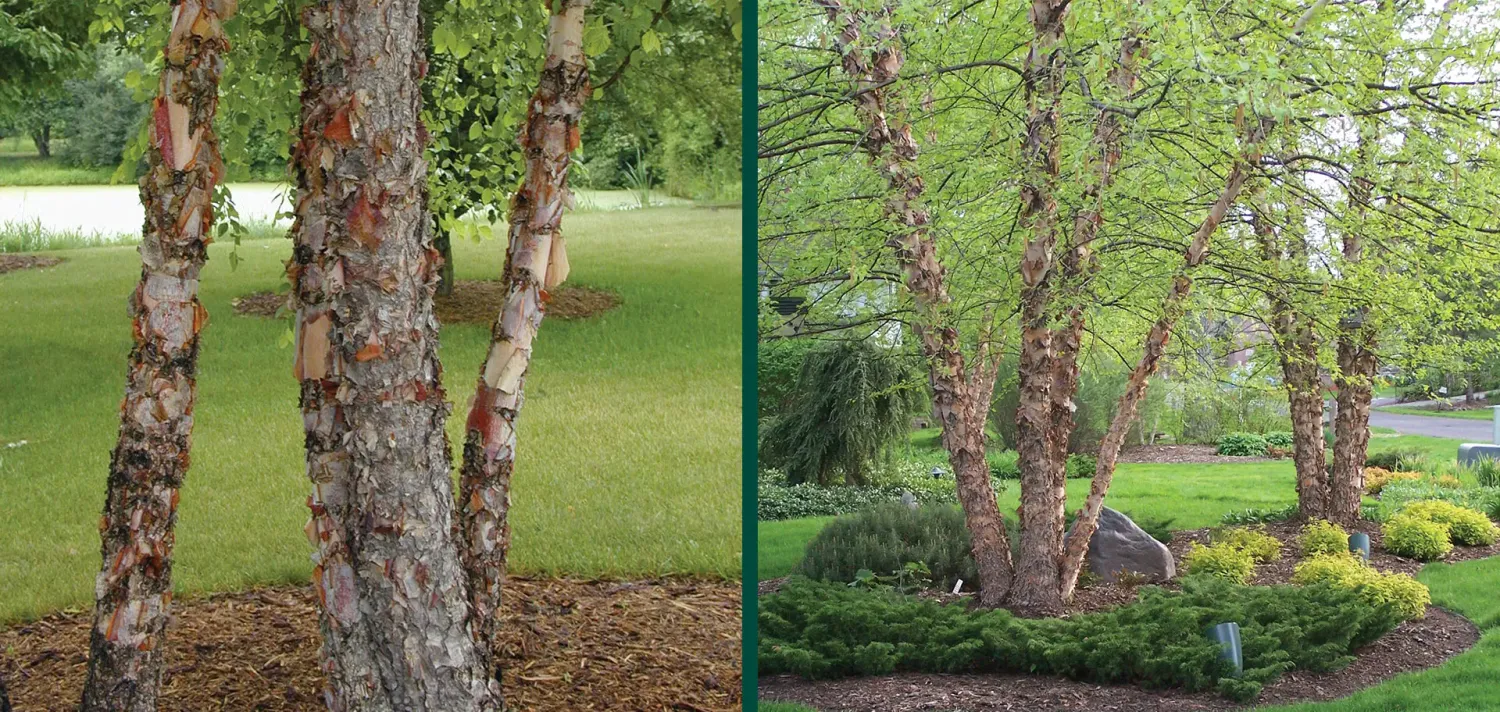

Excellent for wet soil conditions. Beautiful exfoliating cinnamon-brown bark exposes the pink inner bark. Resistant to bronze birch borer.
River Birch makes an excellent specimen tree in spaces large enough for them to reach their full size. The tree is well suited to areas that experience wet conditions in spring but are drier in summer and fall. Its bark makes an attractive point of interest during the growing season and during the winter months. It also functions well for erosion control in wetter sites.
Selecting plants for areas with standing water is a unique challenge for many in Wisconsin. River Birch is certainly on that list.
The seeds are consumed by birds and small mammals. Watch for Ruffed Grouse, Greater Prairie Chicken, Pine Siskin, Redpolls, Purple Finch, and Black-capped Chickadees.
River Birch is a host plant for a substantial number of moths and the like. These include Mourning Cloak (Nymphalis antiopa), Colorful Zale (Zale minerea), Twin-spotted Sphinx (Smerinthus jamaicensis), Unicorn Caterpillar (Schizuraunicornis), The Brother (Raphia frater), Morning Glory Prominent (Schizura ipomoeae), Alien Probole (Probole alienaria), Chocolate Prominent (Peridea ferruginea), Hollow-spotted Plagodis moth (Plagodis alcoolaria), Sharp-lined Yellow (Sicya macularia), Brown-shaded Carpet moth (Venusia comptaria), Toothed Brown Carpet moth (Xanthorhoe lacustrata), Small-eyed Sphinx (Paonias myops), Rose Hooktip (Oreta rosea), Spring Cankerworm moth (Paleacrita vernata), Lycophotia moth (Lycophotia phyllophora), Gray Furcula (Furcula cinerea), Bridled Arches moth (Lacinipolia lorea), Hermina Pinion (Lithophane hemina), Arched Hooktip moth (Drepana arcuata), Elm Sphinx (Ceratomia amyntor), Scallop moth (Cepphis armataria), Cecropia moth (Hyalophora cecropia), Io moth (Automeris io), Promethea Silkmoth (Callosamia promethean), Yellow-dusted Cream moth (Cabera erythemaria), Four-barred Gray (Aethalura intertexta), Radcliffe’s Dagger moth (Acronicta radcliffei), Ovate Dagger moth (Acronicta ovata), Cottonwood Dagger (Acronicta lepusculina), Unmarked Dagger moth (Acronicta innotata), Eclipsed Oak Dagger moth (Acronicta inclara), Distinct Quaker (Achatia distincta), Dark Acrolophus (Acrolophus morus), River Birch Dagger moth (Acronicta betulae), American Dagger moth (Acronicta americana), Tawny Pug moth (Eupithecia ravocostaliata), Black-headed Birch Leaffolder (Ascleris logiana), Striped Birch Pyralid moth (Ortholepis pasadamia), Large Tolype moth (Tolype velleda), and Clemon’s Sphinx (Sphinx luscitiosa).
Price is for 1 tree | #5 Container
Height: 40' - 60' | Spread: 40' - 60'
Adaptable to many sites, struggles in alkaline soil

Photos and description by Johnsons Nursery
We envision a day when knowledge of birds is widespread, decisions affecting them are based on good science, and citizens care about conservation and participate in it so that common species are kept common and imperiled populations are restored.