
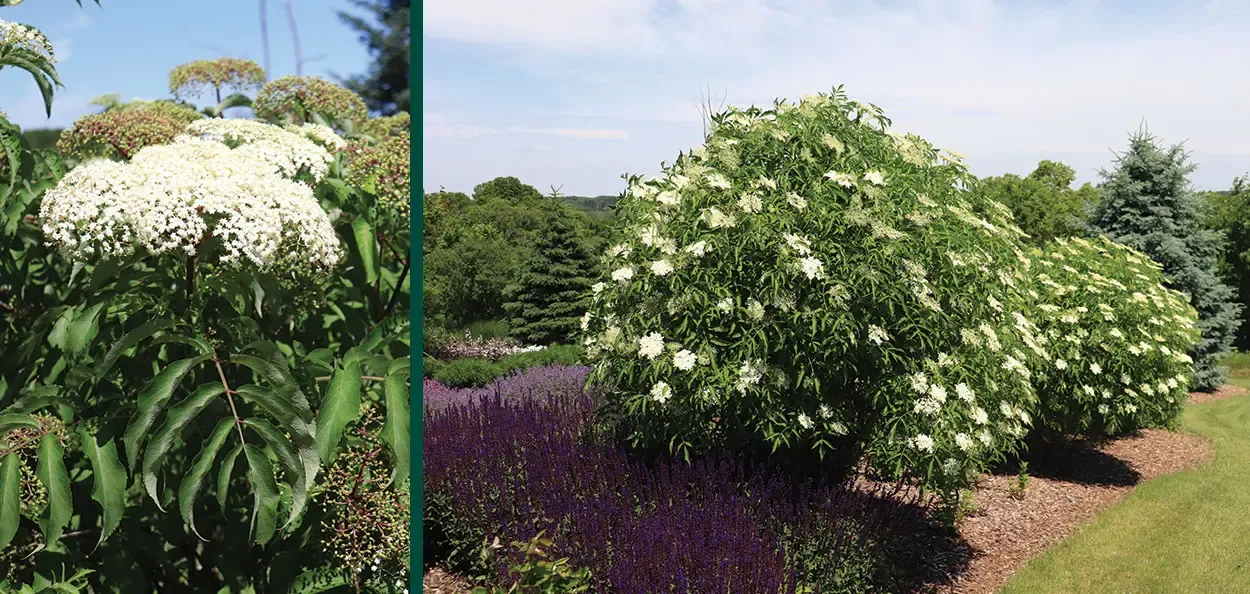

Native to Wisconsin, Scarlet Elderberry is a lovely flowering and fruiting shrub perfect for just about any area. Historically it has been found growing in moist woodlands, along stream banks, fields, and roadsides; however, it is also at home in fairly poor conditions amongst hemlock, beech, and sugar maple. Its fragrant white flowers bloom earlier in spring than most others, attracting many pollinators who seek food after a long winter.
The red fruits of Scarlet Elderberry are high in carbs and fat and are relished by birds including ruffed grouse, catbirds, brown thrashers, and wood thrush. The shrubs also provide excellent cover, perching, and nesting opportunities for birds. Interestingly, when planted along streambanks, Scarlet Elderberry provides shade cover for fish.
Chipmunks, squirrels, mice, raccoons, and black bears also enjoy the fruit.
Browse by deer and other hoofed mammals is minimal as most parts of the plant are toxic, containing cyanide; however, they have been known to partake when other more palatable options are absent. Porcupines, mice, and snowshoe hares will eat the buds and bark in winter.
The flowers, while malodorous to humans, are visited by flies, beetles, and bees to collect pollen. Long-tongued bees such as Honey bees and short-tongued bees including Miner bees, as well as Syrphid flies, and beetles feed on the pollen of Scarlet Elderberry. The pithy stems are easy to hollow out and prove to be excellent nest sites for some carpenter beesThe fruit is mildly toxic to humans if consumed raw but is safe after cooking. Be careful not to plant where children or others may be tempted to eat the fruits. Fortunately, the birds devour these in short order.
Price is for 1 shrub | #2 Container
Plant spread: 6'
Bloom: April-June | Height: 10-12' | Moist to well-drained soil
Photos courtesy of Superior National Forest
We envision a day when knowledge of birds is widespread, decisions affecting them are based on good science, and citizens care about conservation and participate in it so that common species are kept common and imperiled populations are restored.