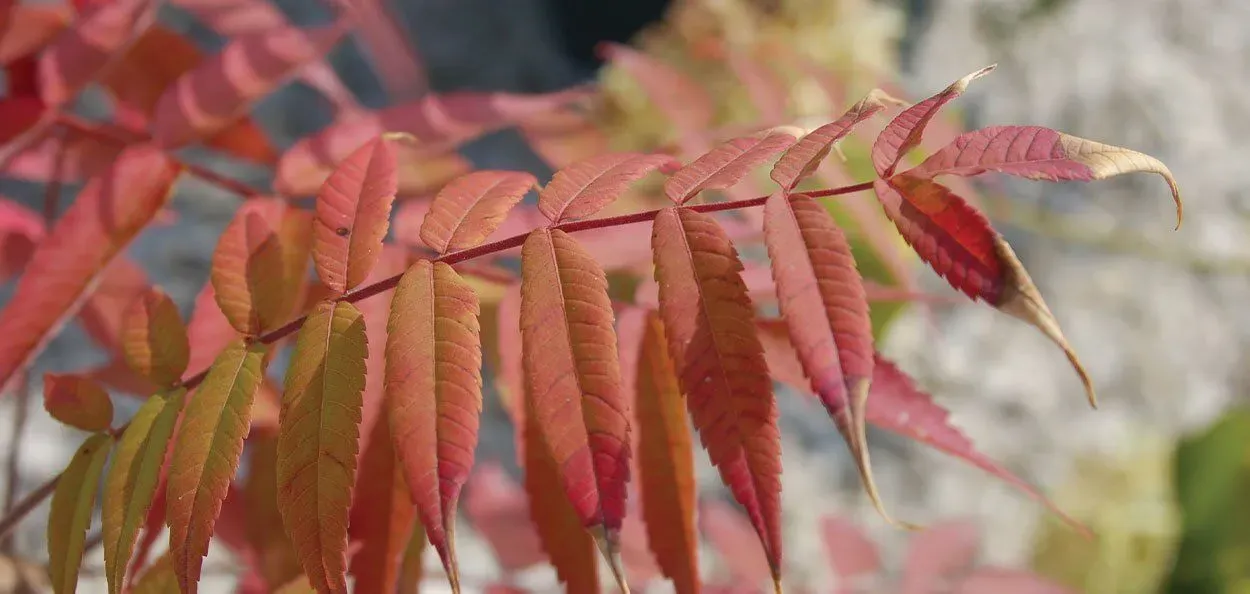

This is an adaptable tough plant that will thrive where other species fail. Tolerant of rocky, dry, exposed sites, it is a vigorous grower. It may be too aggressive for traditional/formal homeowner landscapes, but it’s excellent for restoration of recently disturbed sites such as slopes and banks where pollution, salt spray, and heat can be limiting factors for most other species.
Tremendous wildlife value. Flowers provide nectar for many butterflies, and it’s a larval host plant to the Red-banded Hairstreak (Calycopis cecrops). Over 300 species of birds dine on sumac fruit including: ruffed grouse, ring-necked pheasant, eastern phoebe, common crow, northern mockingbird, gray catbird, American robin, wood thrush, hermit thrush, eastern bluebird, and quail. Rabbits and squirrels will eat the bark. Deer will browse on both stems and fruits.
Price is for 1 shrub | #2 Container
Plant spread: 10' - 15'
Bloom: June - July | Height: 10' - 15' | Tolerates many sites except poorly drained soils
Photos and description from Johnsons Nursery
We envision a day when knowledge of birds is widespread, decisions affecting them are based on good science, and citizens care about conservation and participate in it so that common species are kept common and imperiled populations are restored.