
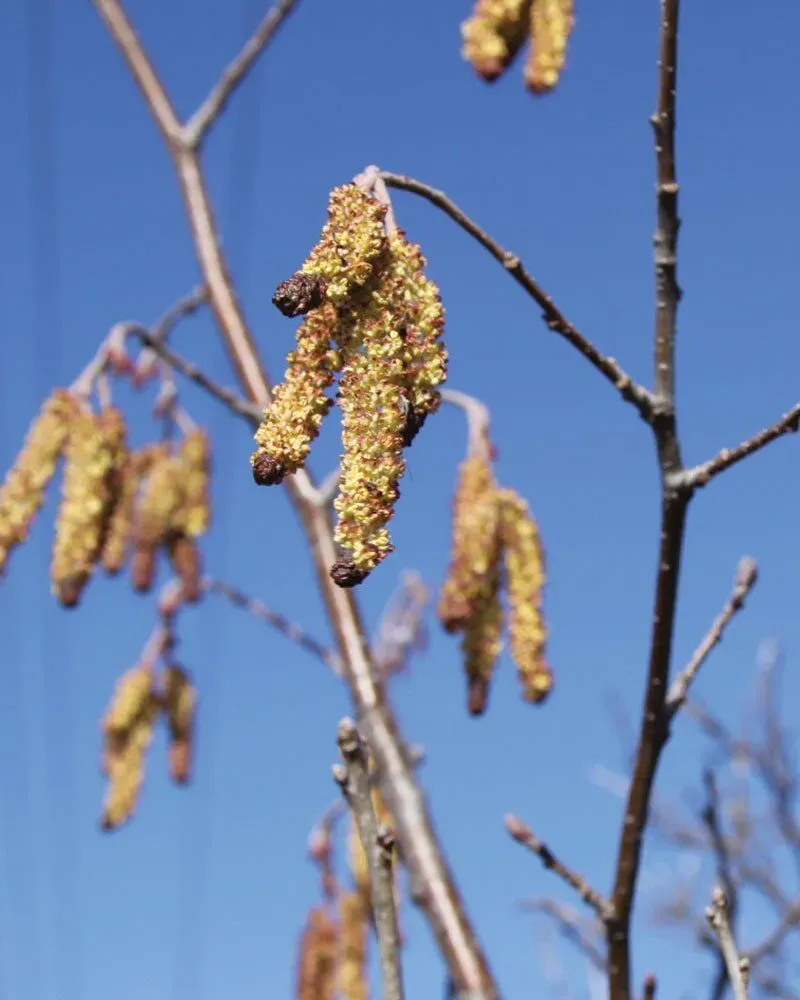

Speckled Alder gives back what it takes ten-fold. Often found in areas with wet soil in or along swamps, meadows, and streams, Speckled Alder often serves as erosion control along banks while providing protection, shelter, and food to many species. It’s a nitrogen-fixing species, replenishing the soil and nourishing the plants growing around it. We typically grow it as a small tree, but it tends to take the form of a multi-stemmed shrub when left to grow in the wild.
Use this tree to naturalize a landscape with wet soil. This tree has a big impact on the ecosystem.
Due to its tendency to sucker and spread, Speckled Alder is a great plant to use for erosion control. Its nitrogen-fixing capabilities make it perfect for a site with depleted soil. Its love of wet soil makes it perfect for a wetland garden or along a stream.
Speckled Alder is a host plant to a significant number of moths and butterflies. Just a small sampling: Pepper-and-salt Geometer (Biston betularia), Bluish-Spring Moth (Lomographa semiclarata), Hübner’s Pero Moth (Pero ancetaria), Maple Spanworm Moth (Ennomos magnaria), Straight-lined Plagodis Moth (Plagodis phlogosaria), White Slant-line (Tetracis cachexiata), Luna Moth (Actias lunata), Banded Tussock Moth (Halysidota tessellaris), Dark-spotted Palthis Moth (Palthis angulalis), American Dagger (Acronicta americana), Walnut Sphinx Moth (Amorpha juglandis), Poecila Sphinx Moth (Sphinx poecila), Apple Sphinx (Sphinx gordius), Columbia Silkmoth (Hyalophora columbia), Green Comma (Polygonia faunus), Pale Alder Moth (Tacparia detersata), Fingered Dagger Moth (Acronicta dactylina), Autumnal Moth (Epirrita autumnata), Gray Dagger Moth (Acronicta grisea), Macaria exauspicata, St. Lawrence Tiger Moth (Platarctia parthenos), Reticulated Fruitworm Moth (Sparganothus reticulatana), Three-lined Leafroller Moth (Pandemis limitata), White-marked Tussock moth (Orgyia leucostigma), Cecropia Moth (Hyalophora cecropia), American Angle Shades (Euplexia benesimilis), and Doubleday’s Baileya (Baileya doubledayi).
Price is for 1 tree | #5 Shrub form tree
Plant spread: 6' - 15'
Bloom: March - April | Height: 15' - 25' | Moist to Wet, Well-Drained Soil. Tolerates Clay, Occasional Flooding, Wet Sites.

Photos and description by Johnsons Nursery
We envision a day when knowledge of birds is widespread, decisions affecting them are based on good science, and citizens care about conservation and participate in it so that common species are kept common and imperiled populations are restored.