
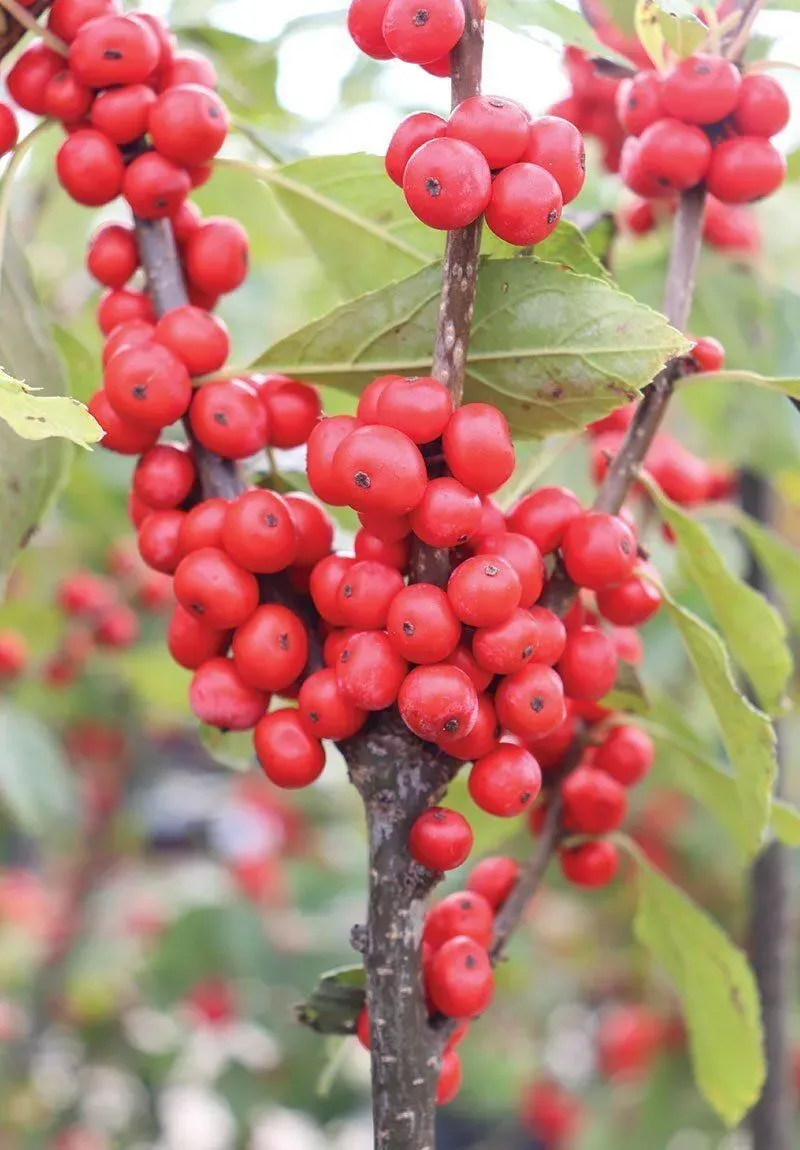

Common Winterberry is a Wisconsin native deciduous holly that varies in size and is found growing in damp areas throughout much of the state. Abundant bright red fruits hug branches on the female plants from fall into winter, providing wildlife and birds much-needed nourishment. Plant in groups as both male and female plants are needed to produce fruit.
Host plant for Henrys Elfin Butterfly (Callophrys henrici) and Harris’ Three-spot (Harrisimemna trisignata).
While humans are not able to eat Winterberry fruits because they are poisonous, they are extremely valuable to wildlife. Berries help sustain migrating birds as they make their way to the south. Fruit is eaten by Cedar Waxwings, Yellow-bellied Sapsuckers, Northern Flickers, Northern Mockingbirds, Gray Catbirds, Brown Thrashers, Eastern Bluebirds, American Robins, Hermit Thrush, Gray-cheeked Thrush, Swainson’s Thrush, Wood Thrush, Eastern Phoebe, White-eyed Vireo, and White-Throated Sparrows. Ruffed Grouse, Bobwhite Quail, and Wild Turkey also enjoy the fruit.
Foliage is food source for rabbits and deer, and seeds enjoyed by White-footed mice.
Common Winterberry is pollinated by bees and possibly flies. The Tridentate Miner bee (Andrena tridens), and Virginia Miner Bee (Andrena virginiana) are visitors of the flowers.
Plant in groups – as both male and female plants are needed for fruit set.
Price is for 1 shrub | #2 Container, male or female
Plant spread: 3-8'
Bloom: April-June | Height: 3-9' | Medium to wet, acidic soil
Companion Plants: Redosier Dogwood
We envision a day when knowledge of birds is widespread, decisions affecting them are based on good science, and citizens care about conservation and participate in it so that common species are kept common and imperiled populations are restored.