
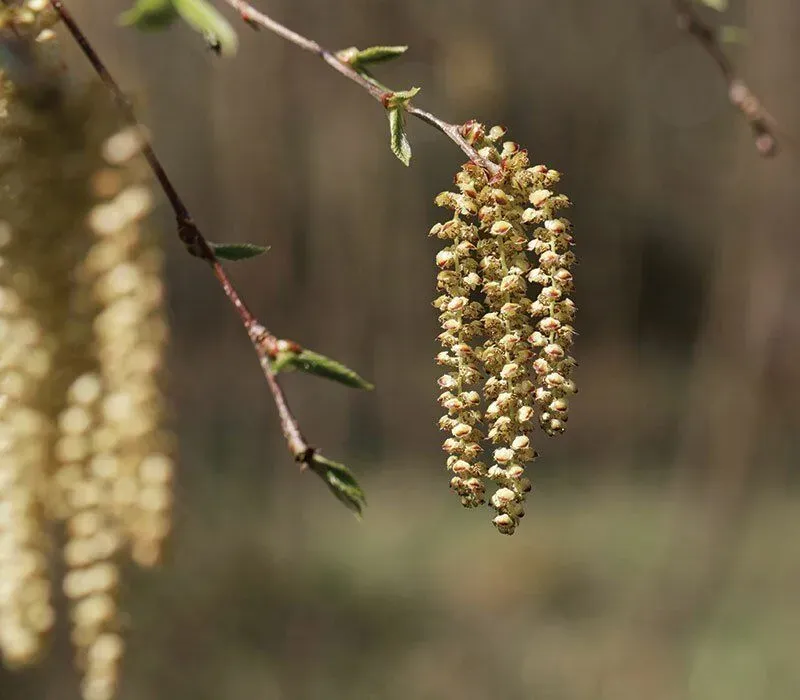

With a spread of up to 50 feet, this tree would be a tight squeeze for a small lot, the more space the better. Plant it in full sun as Yellow Birch can tolerate shade but will grow much more slowly as a result. Acidic, well-draining soils are preferred, although they are adaptable to other soils. The trees grown on our farm were raised in, and are adapted to, alkaline soil. Some salt exposure is tolerated. Compacted, clay soil, however, is a hard “no” for a birch, as they require a location with good drainage. Inundated or poorly drained soils will significantly slow growth.
Yellow Birch should ideally be given a spot with plenty of space to grow. Plant near a bank or in a low area where it can stay moist. This tree is at home in a park and ideal for edges of naturalized areas or restoration projects.
The caterpillars of the Dreamy Duskywing (Erynnis icelus) butterfly feed on the leaf and rest in leaf nests.
The seeds are prized by songbirds such as Pine Siskins, American Tree Sparrows, Common Redpoll, Black-capped Chickadees, Purple Finches, Slate-colored Juncos, Yellow-bellied Sapsuckers, and the game bird: Ruffed Grouse.
In the summer, other vertebrates, such as the Silver-haired bat and the less common Hoary bat, will use large trees such as Yellow Birch as a roost.
Price is for 1 tree | #5 multi-stem tree or #5 single stem tree
Height: 70' - 80' | Spread: 35' - 50'
Fertile sandy loam, well-drained, acidic to alkaline.
Photos and description by Johnsons Nursery
We envision a day when knowledge of birds is widespread, decisions affecting them are based on good science, and citizens care about conservation and participate in it so that common species are kept common and imperiled populations are restored.